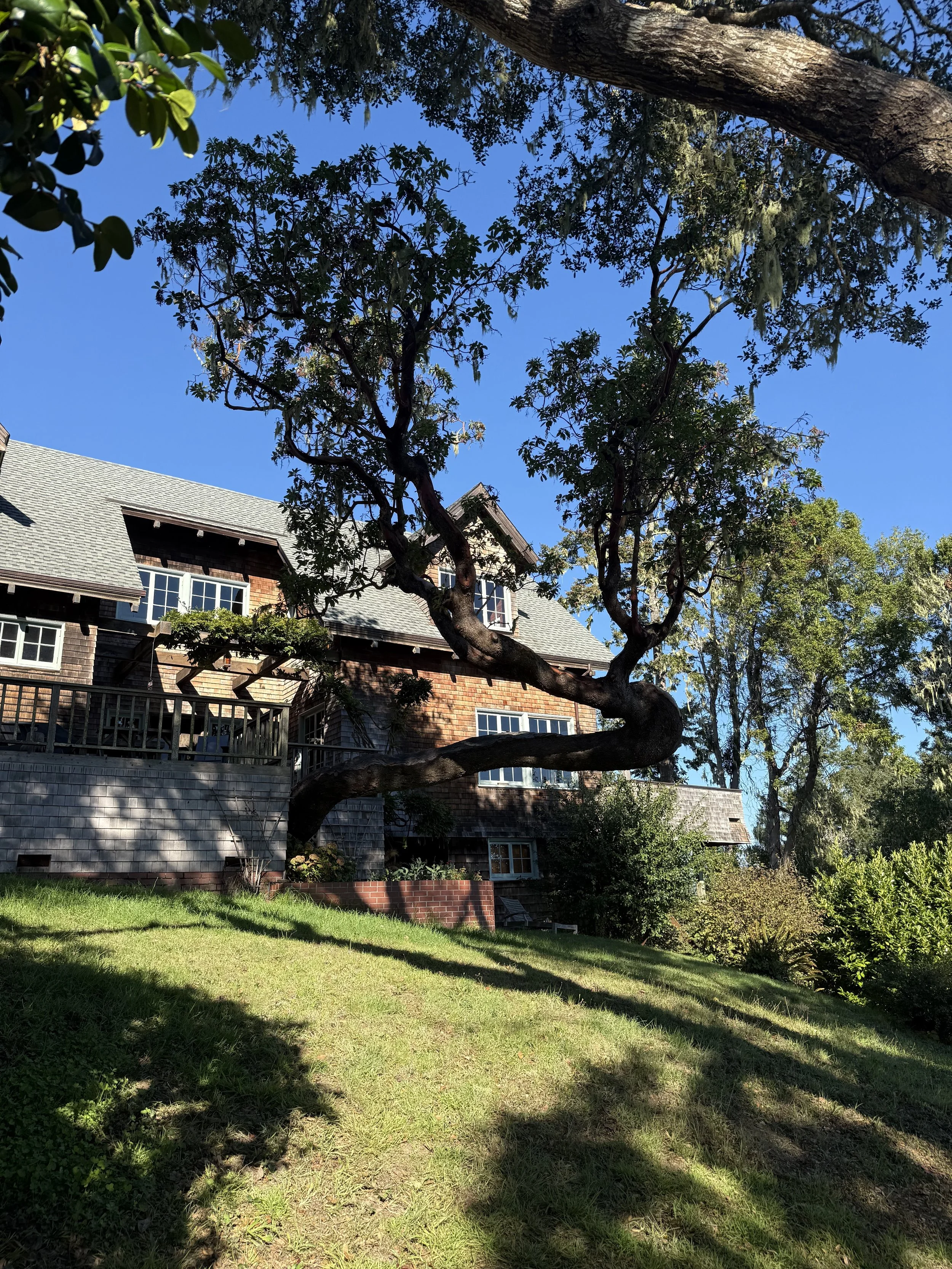
Tree Risk Assessment in Marin, Sonoma, and Napa Counties
Urban Forestry Associates, Inc. provides tree risk assessment services for property owners, attorneys, and public agencies. These assessments evaluate the likelihood of tree or branch failure and the potential consequences, helping clients make informed decisions about tree management. Initial concerns can often be addressed through a site consultation.
What a Tree Risk Assessment Involves
Tree risk assessment considers factors such as tree structure, defects, health, site conditions, and potential targets. We assess conditions including decay, structural weaknesses, root damage, and the effects of environmental or construction-related impacts.
Our evaluations are based on field observations and industry standards, including accepted risk assessment methodologies such as the ISA Tree Risk Assessment Qualification (TRAQ).
When Tree Risk Assessment Is Needed
Clients typically request tree risk assessments following storm events, when visible defects or decline are present, or when concerns arise about the safety of a tree near structures, roadways, or areas of regular use. Assessments are also commonly performed in parks, schools, and other managed landscapes where public safety is a consideration, or when required as part of an arborist report for planning applications.
Our work is grounded in a deep understanding of tree biology and ecology. We focus on identifying meaningful defects and conditions, while recognizing that many trees with visible issues can remain viable and appropriate to retain.
Because we do not prune or remove trees, our recommendations are independent and focused on risk, condition, and long-term management.
selected examples
Tree Removal Due to Structural Conflicts
Three mature coast redwood trees (Sequoia sempervirens) were assessed in relation to ongoing damage to a building and adjacent hardscape. The trees were located immediately next to the structure, with trunks and roots in direct contact with the building and walkway. Root-related lifting and structural movement were evident, and the trees had grown into the building envelope. Pruning and root barriers were not feasible without causing further damage or compromising stability. Although the trees were in good health, the conflict with the structure could not be reasonably mitigated, and removal was determined to be appropriate.
Managing Tree Health and Infrastructure Conflict in a Developed Landscape
A mature tree was assessed in relation to damage to adjacent hardscape, including lifting of concrete surfaces. Options for retaining the tree were evaluated, including the use of root barriers, but installation at that stage would have required cutting structural roots and could have compromised stability. Recommendations focused on either modifying the surrounding hardscape to accommodate root growth or removing and replacing the tree if maintaining the infrastructure was the priority. Where retention was preferred, guidance was provided to adjust hardscape elements while preserving the tree.
See Selected Projects for more examples of tree risk assessment in practice.
We provide tree risk assessment services throughout Marin County, Sonoma County, Napa County, and surrounding Bay Area communities.
If you have concerns about a tree or would like an assessment, contact us to discuss your situation.